FLOOD PRONE ARCHITECTURE
Your block sits in a flood zone. Council requires flood reports, habitable floor levels above PMF or 1% AEP, and setbacks that reduce your buildable area. You need an architect who understands flood planning controls—not just in theory, but in practice.
Flood-prone sites are one of several challenging coastal conditions we regularly navigate, delivering award-winning architecture that meets stringent compliance requirements while maximizing site potential.
Understanding Flood Planning Requirements
Flood planning isn't a single rule—it's a layered set of controls that vary by council, catchment, and site-specific conditions.
Flood Study Requirements
Before design begins, you'll need a flood study from a qualified hydraulic engineer determining:
Probable Maximum Flood (PMF) level
1% Annual Exceedance Probability (AEP) flood level
Flood planning level (FPL)—typically PMF or 1% AEP plus freeboard
Evacuation constraints and flood behavior on your lot
We coordinate with hydraulic consultants early to understand these levels and their implications for floor height, access, and buildable area.
Habitable Floor Levels and Setbacks
Council typically requires habitable floor levels at or above flood planning level. Non-habitable spaces may be permitted below FPL with flood-resistant construction.
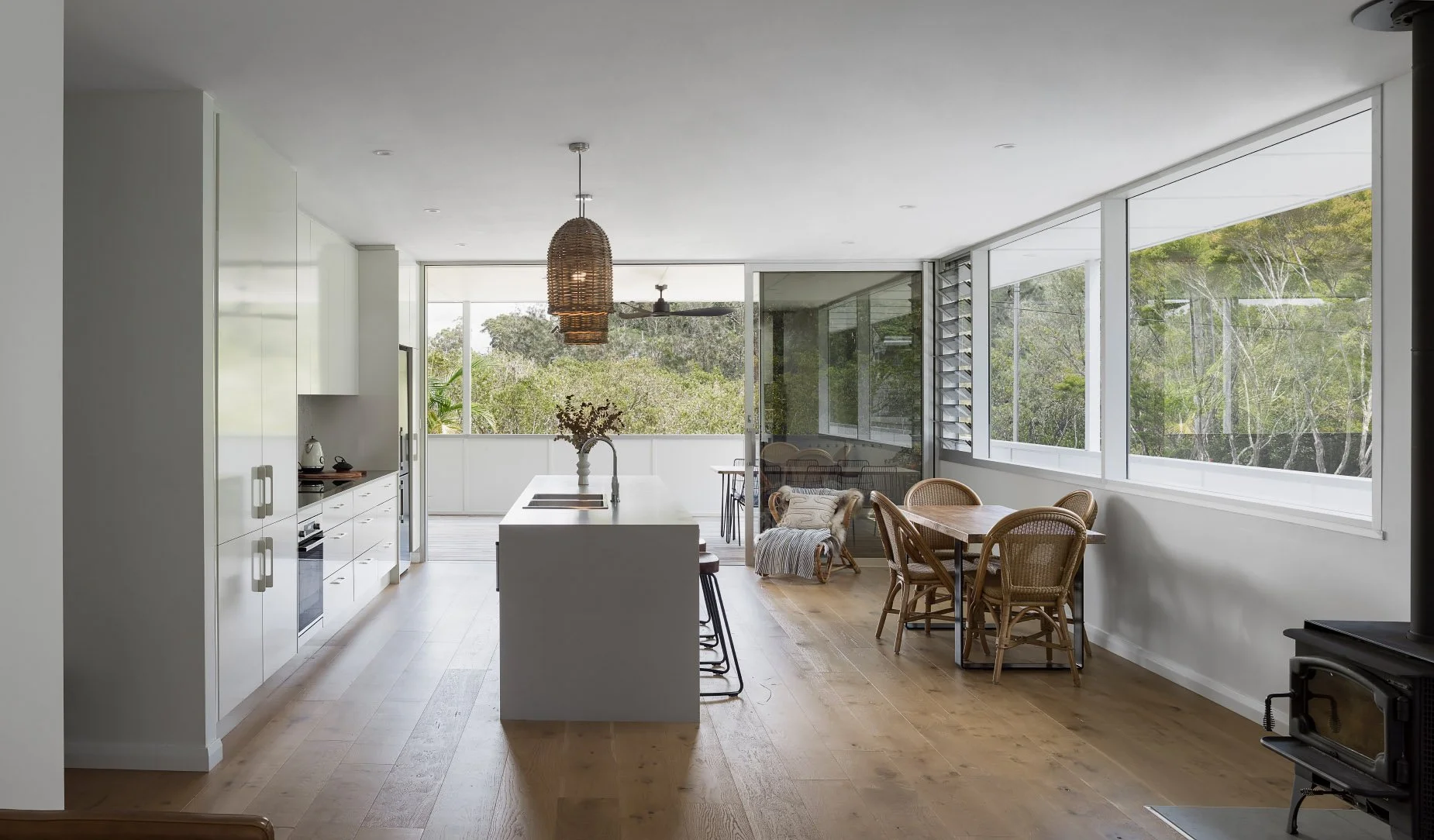
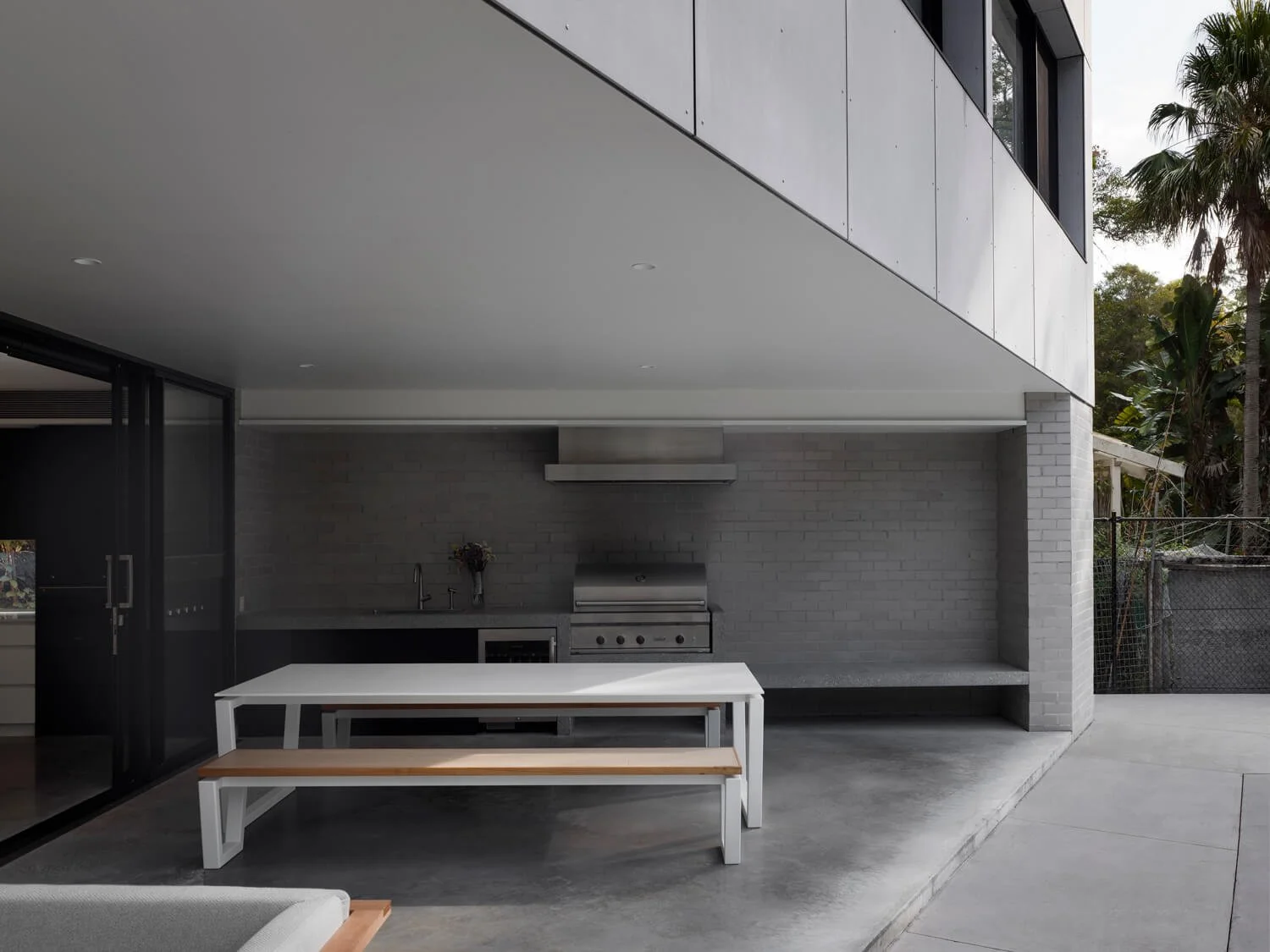
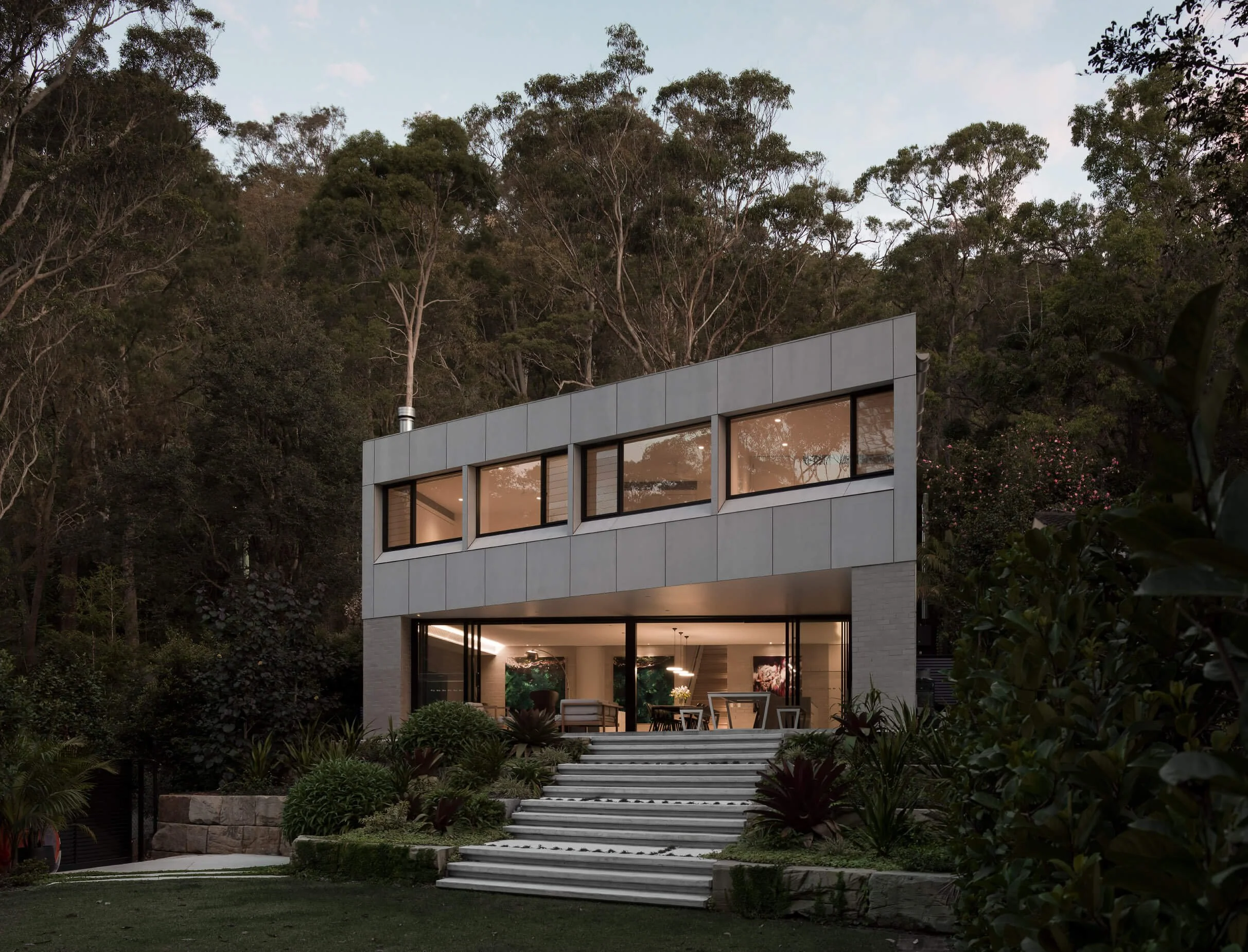
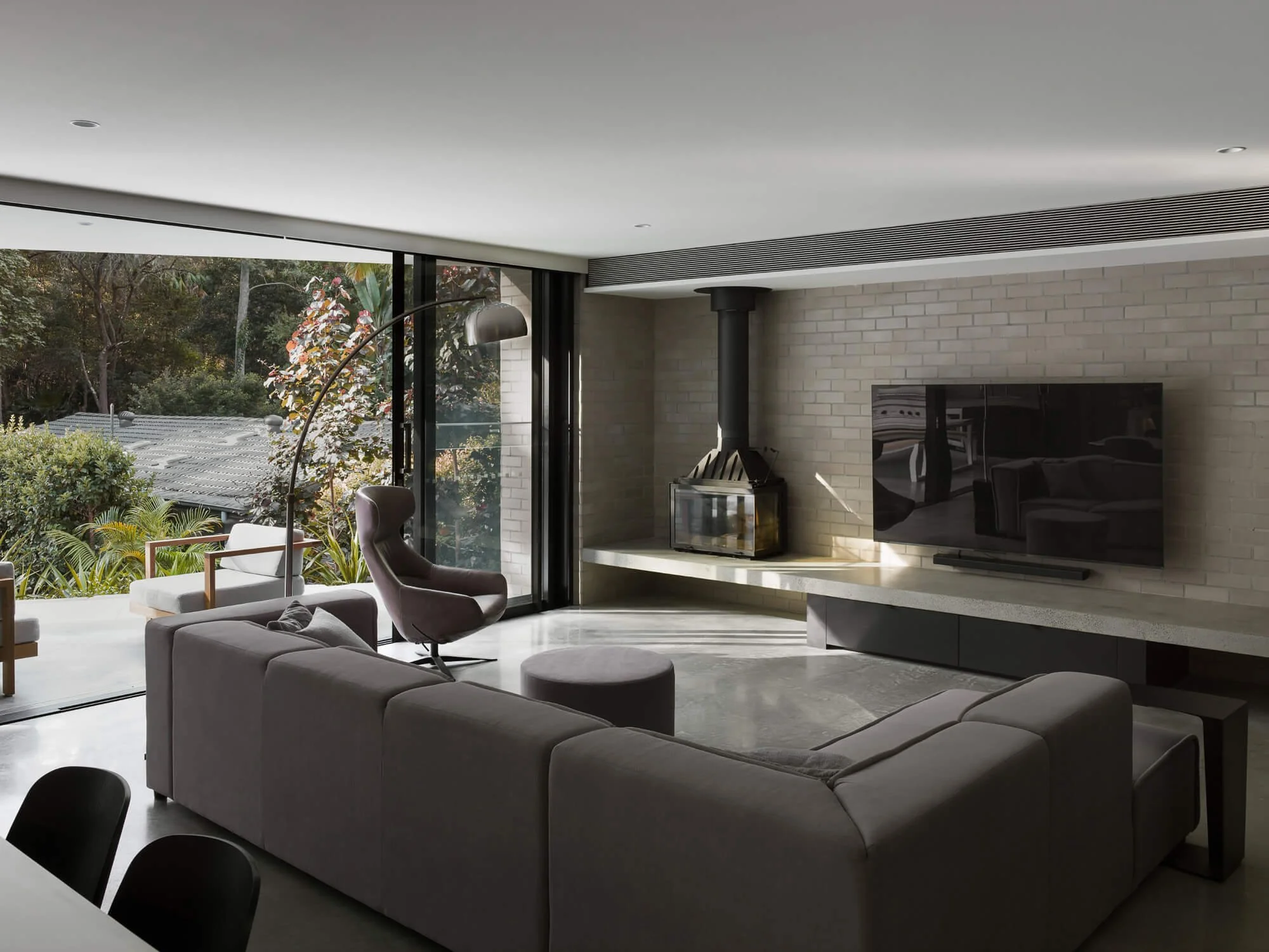
At 10/30 House, extensive flood setbacks reduced buildable footprint to 12% of the total lot area while BAL-12.5 bushfire compliance dictated material selections. The design addressed both simultaneously—double brick lower level with polished concrete floors and suspended concrete elements positioned above flood level, timber frame upper levels with compliant cladding and roofing. The project received a Commendation at the Newcastle Architecture Awards, with the jury recognizing how required level changes became architectural moments.
Geotechnical Considerations
Flood-prone sites often present challenging soil conditions affecting foundation design and costs.
Sites subject to regular inundation typically have higher groundwater tables, reduced soil bearing capacity, and seasonal variation. Geotechnical investigation determines appropriate foundation systems:
Conventional raft slab where soil conditions permit
Screw piles offering rapid installation and minimal excavation
Suspended concrete slabs on piers where significant elevation is required
Hybrid systems combining different foundation types
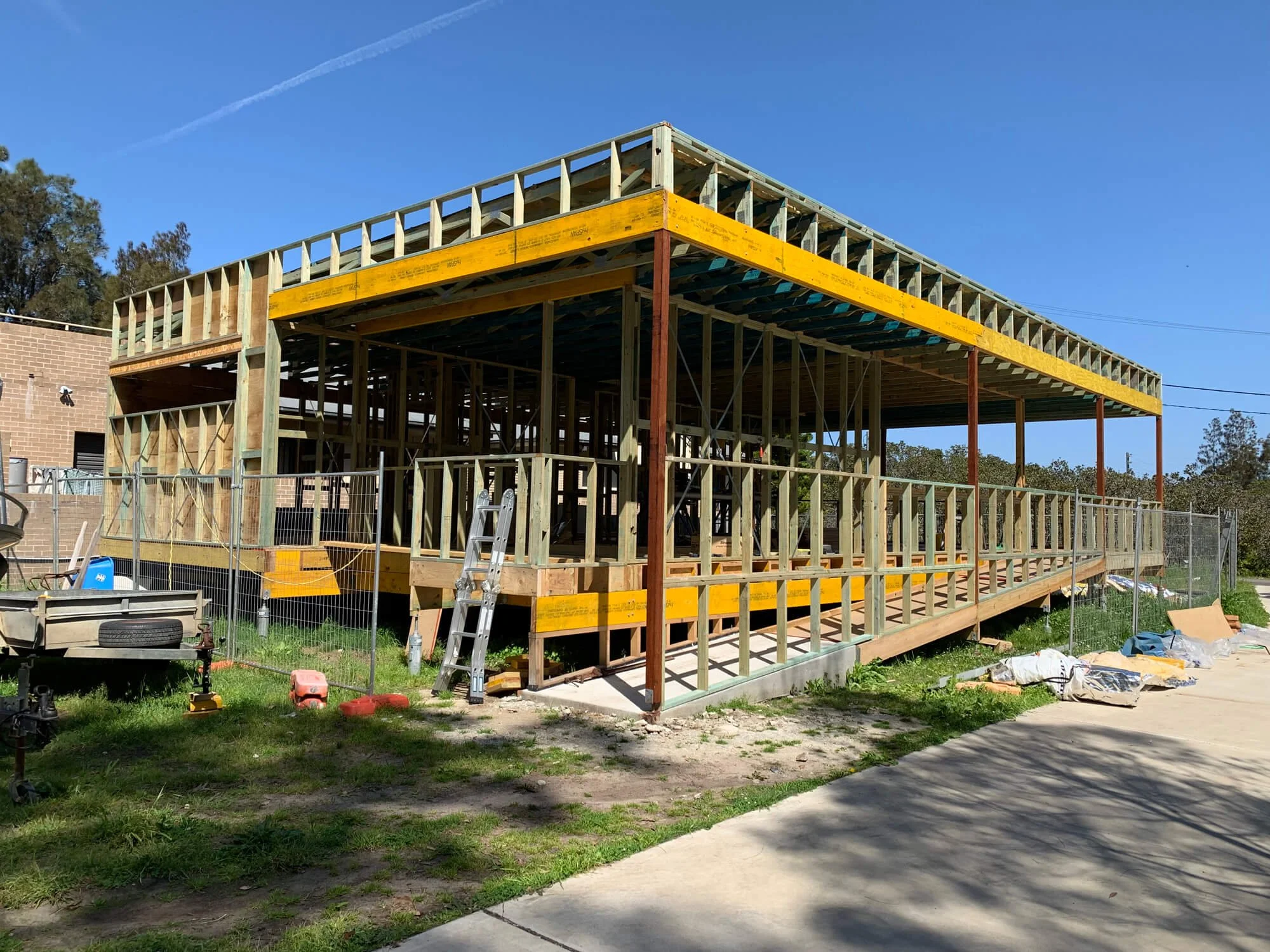
Noble House in Killcare demonstrates screw pile construction—the entire ground level was raised on screw piles to achieve required flood planning levels while minimizing site disturbance. The project was featured in Sanctuary Magazine.
Suspended construction often proves more viable than significant fill placement, particularly when combined with steep site conditions.
Development Application Requirements
Flood-prone sites rarely qualify for Complying Development Certificates. CDC pathways explicitly exclude land identified as flood prone in council maps or subject to flood-related development controls.
Development Applications require additional documentation:
Hydraulic consultant's flood study and floor level certification
Demonstrated compliance with flood planning controls
Geotechnical report addressing foundation design
Stormwater and drainage design
Material specifications for flood-resistant construction
We've successfully secured DA approvals on flood-affected sites, meeting Central Coast Council requirements and coordinating the consultant team required for compliant documentation.
Pre-DA consultation with council's development engineers may be valuable to clarify controls, floor level interpretations, and documentation requirements.
Flood-Resistant Construction
If portions of your building sit below flood planning level, construction must withstand inundation. Materials must resist deterioration from water exposure, allow cleaning without replacement, and maintain structural integrity when saturated.
This typically means concrete or masonry construction, concrete floors, tile or concrete finishes, and corrosion-resistant fixtures.
Elevated living areas require structural approaches balancing flood compliance with architectural quality. Suspended concrete slabs provide thermal mass and robust construction. Timber frame on concrete or steel substructure offers lighter weight and faster construction. Hybrid systems balance durability, cost, and efficiency.
Architectural Opportunities
Flood setbacks and elevated floor levels shape architectural outcomes that can enhance the project.
Required floor levels often capture views over vegetation, improve natural ventilation, create separation from ground-level moisture, and may create usable underfloor space. At 10/30 House, required level changes became architectural moments, projecting interiors toward the generous garden and bushland beyond.
Flood setbacks reduce buildable area but increase usable landscape—greater privacy, reduced site impact, and outdoor spaces that extend the perceived size of the home.
Coordinating the Consultant Team
Flood-prone sites require early consultant involvement. We work closely with Thitchener Consulting (our structural engineering partner) to integrate foundation design and structural requirements from the earliest design stages.
Hydraulic consultants establish flood levels. Geotechnical engineers determine foundation viability. When sites carry both flood and bushfire classifications, consultant coordination becomes essential.
Our Process
Site Assessment: Understanding flood studies, council overlays, and preliminary buildable area
Consultant Engagement: Coordinating hydraulic and geotechnical consultants early
Concept Design: Designing with setbacks and floor levels as generative constraints
Structural Coordination: Working with Thitchener Consulting for efficient structural systems
DA Documentation: Preparing compliant submissions and coordinating with council
Construction Documentation: Detailed documentation for builder pricing and construction
Site Assistance and Contract Administration: On-site support during construction to ensure flood-compliant detailing is executed correctly
Reality of Flood-Prone Coastal Sites
Flood zones present genuine constraints—reduced buildable area, elevated floor levels, foundation complexity, and consultant coordination requirements. These aren't problems we can eliminate.
What we can do is design within these constraints to achieve architectural outcomes that work with flood requirements rather than fighting them. Elevated living areas capture views. Reduced footprints preserve landscape setting. Required floor levels create spatial interest.
If your site carries flood overlay, we should talk. Our process begins with understanding your site's specific flood constraints, coordinating the consultants required for compliant design, and creating architecture that turns planning restrictions into design opportunities.
Our flood-compliant projects have received architectural recognition and been published, demonstrating that flood zones can accommodate exceptional coastal architecture.
Central Coast architect with 25 years experience in flood-compliant design. Award-winning flood and bushfire architecture from Newcastle to Newport.