
COASTAL CONCRETE ARCHITECTURE
You've chosen concrete for good reasons: durability in salt air, thermal performance, bushfire compliance, and a material aesthetic that improves with age. Now you need an architect who understands how to design with concrete on the coast—not just specify it.
Coastal concrete architecture requires more than material selection. It demands an understanding of formwork techniques, thermal mass integration, salt exposure detailing, and how concrete behaves structurally on challenging coastal sites.
Why Concrete for Coastal Sites
Durability in Salt Environments
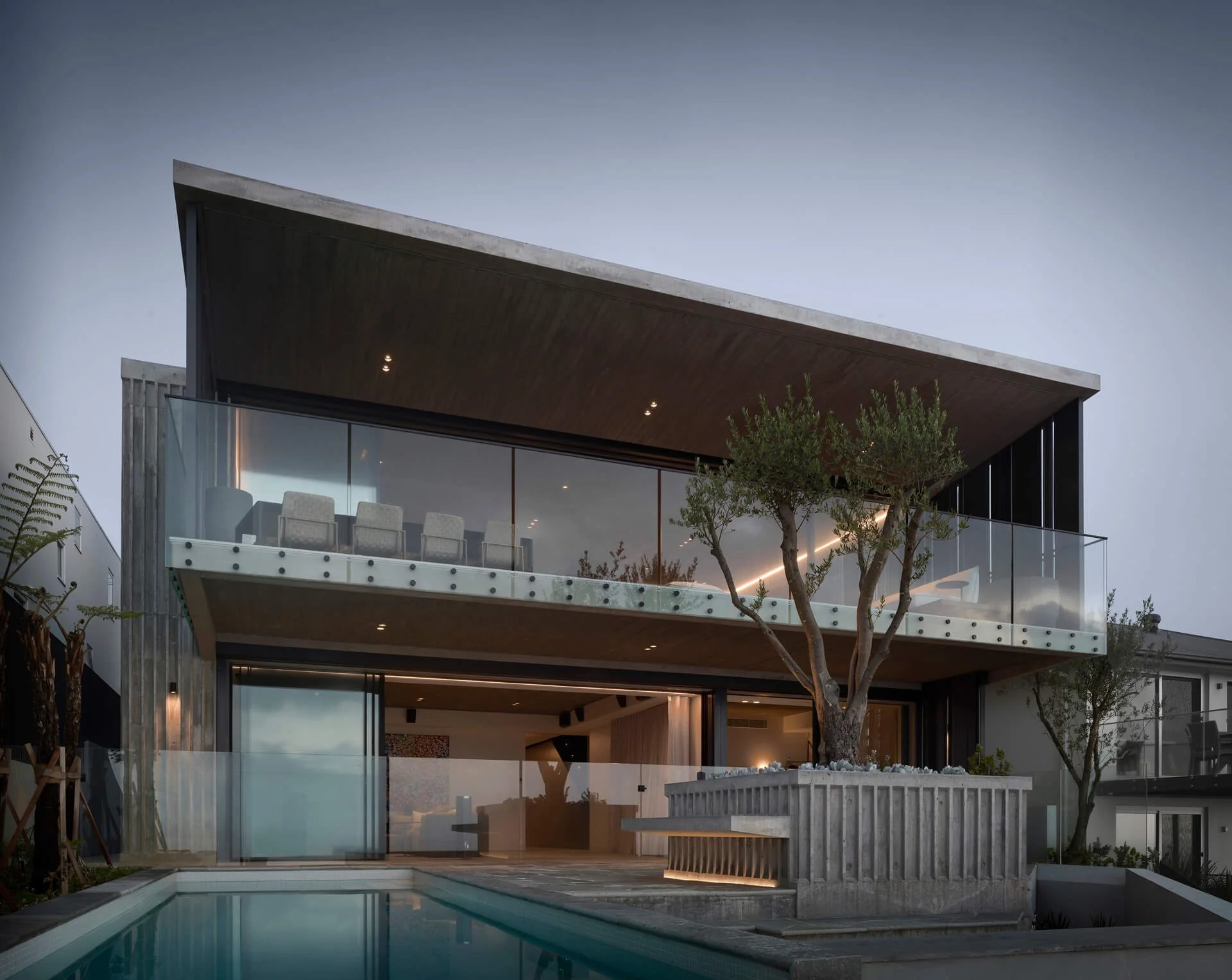
Waterfront locations—ocean beaches, harbour foreshores, lake edges—expose buildings to salt-laden air, high humidity, and extreme weather events. We've designed concrete coastal projects across the Central Coast, Sydney's Northern Beaches, and Sydney Harbour, addressing the specific durability requirements marine environments demand. Properly detailed concrete construction resists corrosion, requires minimal maintenance, and performs reliably over decades. Unlike timber cladding that requires constant maintenance in waterfront conditions, concrete improves aesthetically as it weathers.
Bushfire Compliance
Concrete is non-combustible and forms the structural basis for BAL-rated construction in bushfire zones. Many of our coastal sites face dual challenges: ocean exposure and bushfire risk. Concrete construction addresses both simultaneously.
Thermal Mass Performance
Exposed concrete slabs and walls provide thermal mass that moderates internal temperatures year-round. In coastal climates with significant diurnal temperature variation, thermal mass reduces heating and cooling loads, improving NatHERS ratings and long-term comfort. Combined with appropriate orientation, shading, and ventilation, concrete construction delivers genuinely passive thermal performance.
Structural Capability on Challenging Sites
Steep coastal sites, rock platforms, and escarpment edges often require suspended concrete slabs, cantilevers, and retaining structures. Concrete's structural properties make these challenging geometries achievable while maintaining architectural clarity.
Formwork Approaches
Board-Formed Concrete
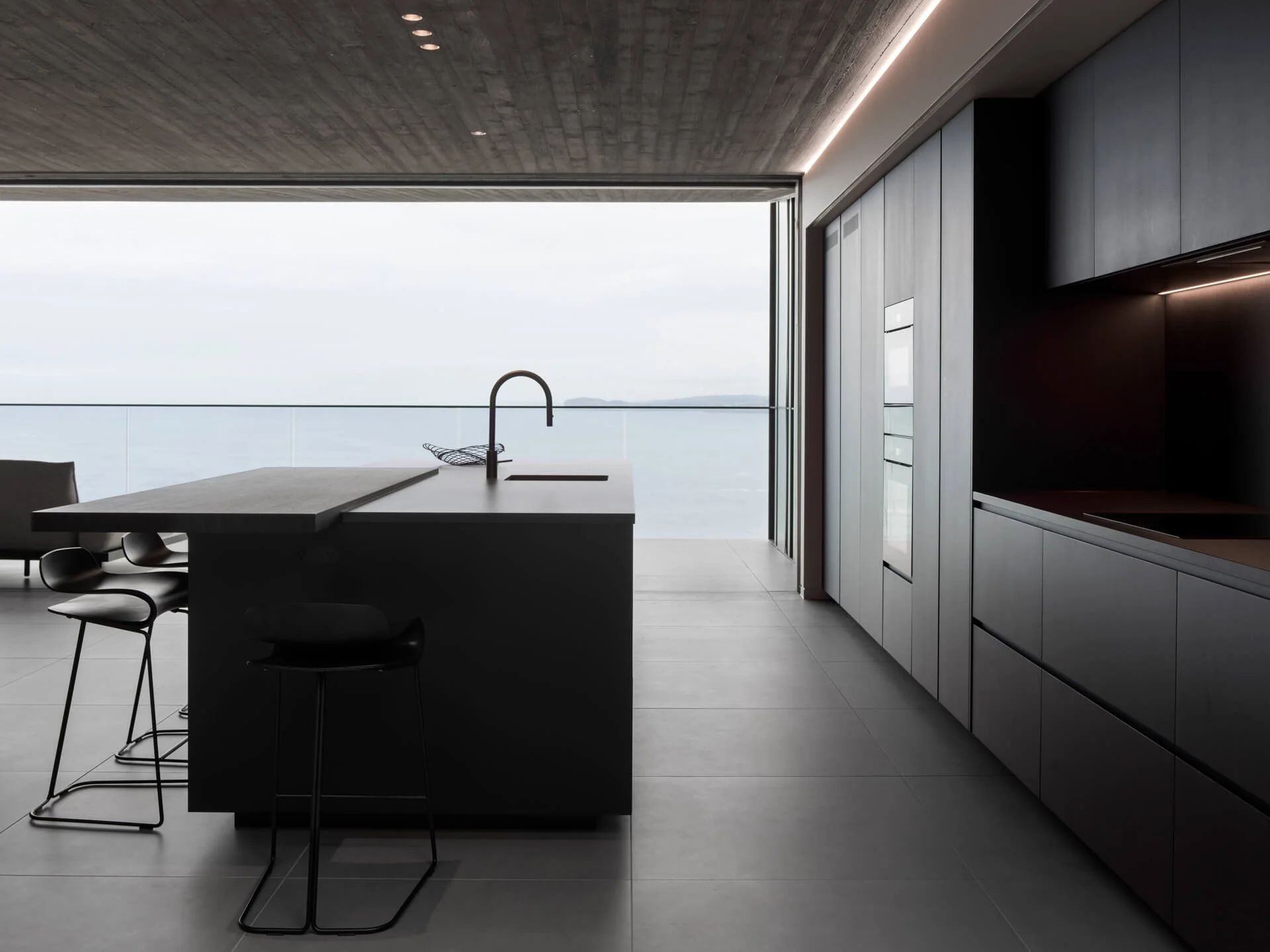
Board-formed concrete uses timber planks as formwork liners, imprinting wood grain texture onto cured concrete surfaces. The result is a tactile finish that combines concrete's mass with the visual warmth of timber grain patterns. This technique requires careful formwork preparation, consistent concrete placement, and experienced contractors who understand the variables affecting final appearance.
We've utilized board-formed concrete where the site and budget allow, typically for feature walls, entry sequences, or exterior surfaces where the texture contributes to the overall design language.
Class Formwork (Off-Form Concrete)
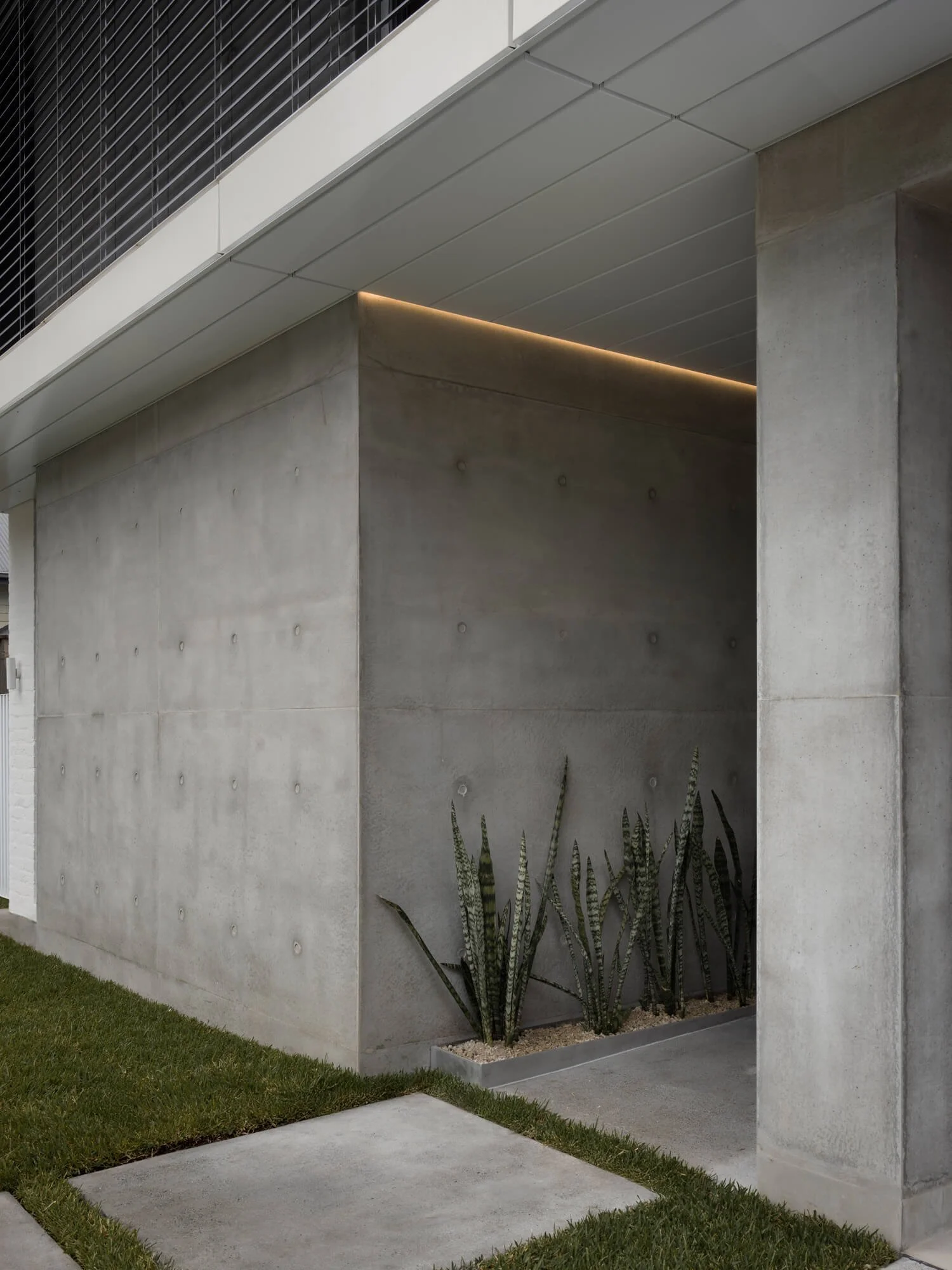
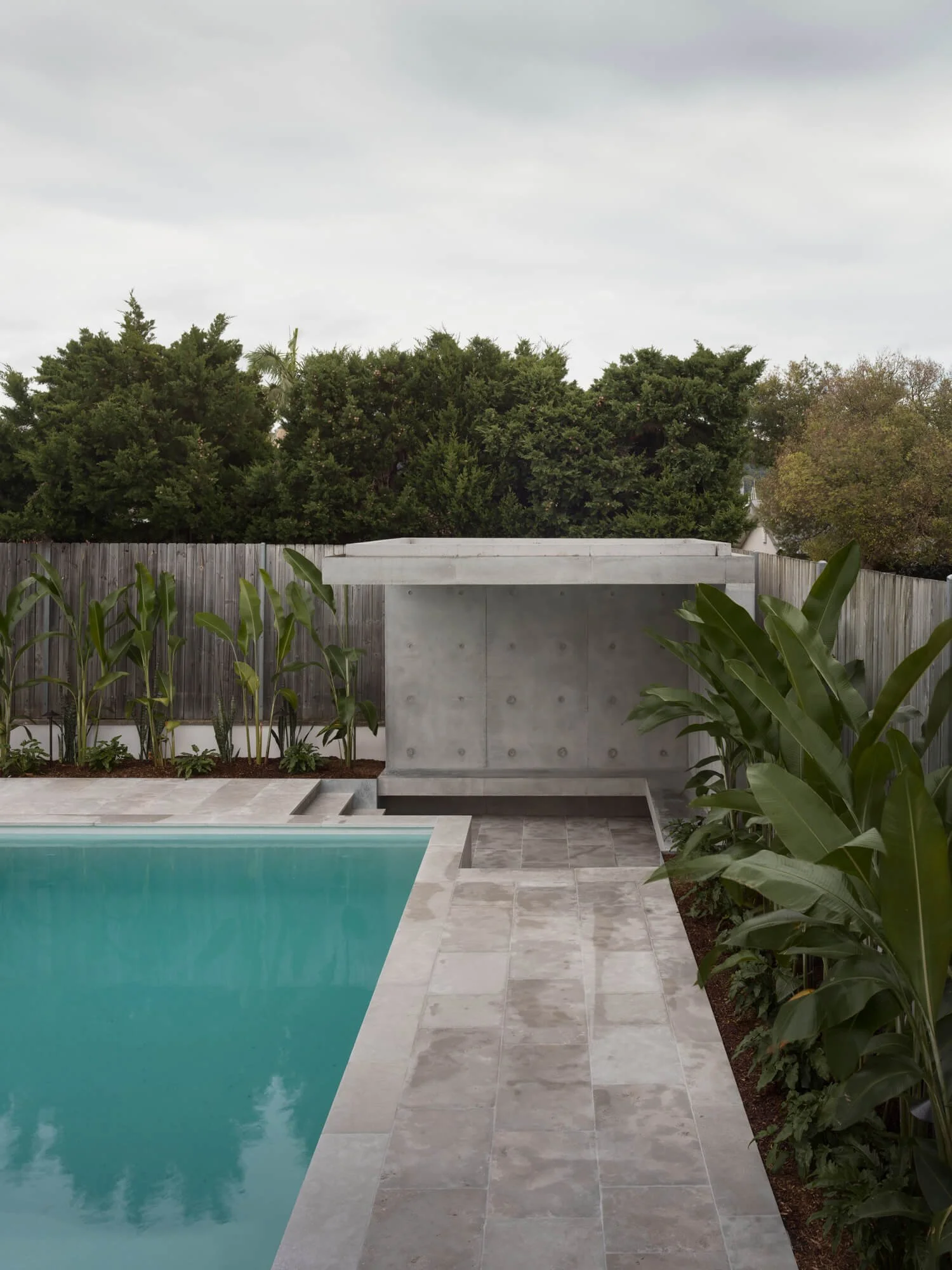
Class formwork—often using plywood or steel forms—produces smooth, monolithic concrete surfaces. This approach suits projects where clean geometric expression is the priority, or where budget constraints make board-forming impractical across large areas. Off-form concrete requires equally rigorous attention to formwork joints, tie-hole locations, and concrete mix design to achieve consistent results.
Both approaches are legitimate architectural responses. The choice depends on project context, budget, and the specific character you're trying to achieve.
Thermal Mass and Passive Design
Concrete's thermal mass is most effective when:
Slab and wall surfaces are exposed internally (not covered by carpet, insulation linings, or excessive wall finishes)
Concrete is thermally connected to living spaces where temperature moderation matters
Solar access is controlled through appropriate eave depths, external shading, or operable screening
Natural ventilation pathways exist to purge heat during summer evenings
We coordinate concrete thermal mass strategies with building orientation, window placement, and NatHERS modeling to ensure the mass actually improves thermal performance rather than just adding cost and weight.
Detailing for Coastal Durability
Salt exposure accelerates corrosion of steel reinforcement if concrete cover depths and crack control aren't properly managed. Our detailing approach includes:
Adequate concrete cover to reinforcement (typically 50mm+ for severe coastal exposure)
High-performance concrete mixes with appropriate water-cement ratios and additives
Control joint planning to manage shrinkage cracking
Waterproofing coordination at junctions between concrete and other materials
Drainage detailing to prevent water pooling on horizontal surfaces
These aren't aesthetic decisions—they're engineering requirements that determine whether a concrete building performs well or deteriorates prematurely in coastal conditions.
Our Approach
We work with concrete as an integrated material system, not just a finish selection. This means coordinating:
Structural engineering for suspended slabs, cantilevers, and retaining elements on coastal sites
Formwork planning with builders experienced in achieving consistent results
Thermal modeling to validate mass performance claims
Bushfire compliance where concrete forms part of the BAL-rated construction assembly
Construction sequencing to minimize remedial work and maximize first-pour quality
Our process begins with site assessment and assisting you to engage the right consultants for your project, followed by integrated design that considers concrete's structural, thermal, and material properties from concept stage.
Project Examples
Killcare Heights
Rock escarpment site, BAL-FZ compliance, Ribbed board-formed concrete external walls and board formed concrete soffits. The concrete work anchors the building to the site while meeting bushfire construction standards.
Newport Residence
Three-storey class finish off-form concrete construction on sloping coastal site. Demonstrates formwork precision and durability detailing required for exposed waterfront locations.
Beachview House, Macmasters Beach
Steep north-facing slope, BAL-FZ, Bouddi National Park edge. Suspended concrete platforms to main living level and exterior decks, all polished concrete floors, addressing site gradient, bushfire exposure, and proximity to ecologically sensitive land.
Getting Started
Coastal concrete projects typically involve geotechnical investigation (soil/rock conditions affecting foundations), bushfire assessment (if in designated zones), and early structural coordination to determine feasibility and cost implications.
If you're considering concrete construction on a coastal site, the first step is confirming your site can support the approach structurally and that your budget aligns with the construction methodology required.